Free tool · HVAC
AC Tonnage Calculator
Convert a cooling load to tons and screen nominal sizes without a square-foot shortcut.
UpdatedLoading the calculator…
A cooling load of 15,945.6 Btu/h equals 1.3288 tons. The 1.5-ton nominal option is about 112.9% of that load and fits the cooling capacity screening band. Start with a measured or calculated load from the HVAC load calculator, then replace nominal capacity with the manufacturer's design-condition performance during final equipment selection.
How to use this ac tonnage calculator
Enter the design inputs
Convert a cooling load to tons and screen nominal sizes without a square-foot shortcut.
Compare the capacity screen
Inspect each nominal size against the selected percentage range. A missing candidate is meaningful; do not force a larger unit into the screen to create an answer.
Check actual equipment performance
Carry the reviewed load and design conditions to the manufacturer capacity data. Keep heating and cooling checks identifiable when reviewing a heat-pump selection.
Convert BTU per hour to tons of cooling
One ton of refrigeration represents 12,000 Btu/h of cooling capacity. Divide total cooling load by 12,000 to express the same load in tons. The conversion does not add safety capacity or choose an available machine. A 15,945.6 Btu/h load is 1.3288 tons whether the equipment catalog contains a 1.5-ton unit, a variable-capacity model or no suitable option at all.
Enter total cooling load, including sensible and latent components. Do not substitute heating load, electrical watts or a compressor's nameplate current. The units matter: Btu is energy, while Btu per hour is a rate. A report showing separate room values needs to be reconciled to the coincident building load before those figures are treated as an equipment-selection total.
The tool lists nominal sizes of 1.5, 2, 2.5, 3, 3.5, 4 and 5 tons. These are comparison points, not a complete equipment catalog. Nominal size is a product class; delivered capacity varies with outdoor temperature, indoor wet-bulb conditions and airflow. For the air-distribution step, carry the sensible load into the duct sizing calculator, where airflow and pressure loss are handled separately. A change in nominal tonnage does not automatically establish the correct branch duct sizes. Read the Manual J input checklist before treating a load value as ready for equipment comparison.
Apply a capacity band before rounding upward
This worksheet screens cooling-only equipment and heat pumps in cooling-dominated conditions between 95% and 115% of total cooling load. The heating-dominated heat-pump option permits an upper screen of 125%. These are the requested simplified Manual S-style bands. Actual Manual S selection depends on equipment type, the applicable edition, climate and manufacturer performance data, so the screen must not be treated as a universal approval rule.
For the default load, the cooling band extends from 15,148.32 to 18,337.44 Btu/h. A nominal 1.5-ton unit represents 18,000 Btu/h and lies inside it. A nominal 2-ton unit represents 24,000 Btu/h and does not. The calculator prefers the next nominal capacity at or above the load when it fits; a lower nominal within the 95% minimum can remain a screening candidate.
If no listed size fits, the result says to review equipment. It never silently selects a larger machine outside the band. A 19,000 Btu/h load is one such gap between the listed nominal sizes under the cooling screen. Check other equipment and design-condition capacities. The electrical load calculator is the separate next step for the chosen unit's electrical input, not its cooling output. Match selected equipment identifiers with the single line diagram when coordinating its electrical input data.
Why square feet per ton is only a sanity check
A rule such as 400 to 600 sq ft per ton may be familiar, but it cannot represent the envelope, air leakage, glass orientation and moisture conditions of an individual building. Two homes with identical floor areas can have different window areas, insulation and design temperatures. Applying a fixed divisor hides those differences and can produce oversized equipment in a small, well-insulated house.
The default example makes that limitation visible. Its 900 sq ft floor area and 15,945.6 Btu/h load correspond to 1.3288 load tons. The screening candidate is 1.5 nominal tons, not an automatic 2.5-ton choice. Floor area is useful as a reason to investigate an unexpected result, but it is not the calculation method here. No field accepts square feet as a substitute for cooling load.
Oversizing can affect run time, moisture removal and cycling behavior, while undersizing can leave design conditions unmet. The appropriate selection compares both sensible and latent requirements with actual capacity at the operating conditions. If envelope quantities are uncertain, reconcile the measured elevations in the siding calculator and the interior ceiling scope in the drywall calculator. Those measurements support a load calculation; they do not independently determine equipment tonnage.
Review a heat pump against both seasons
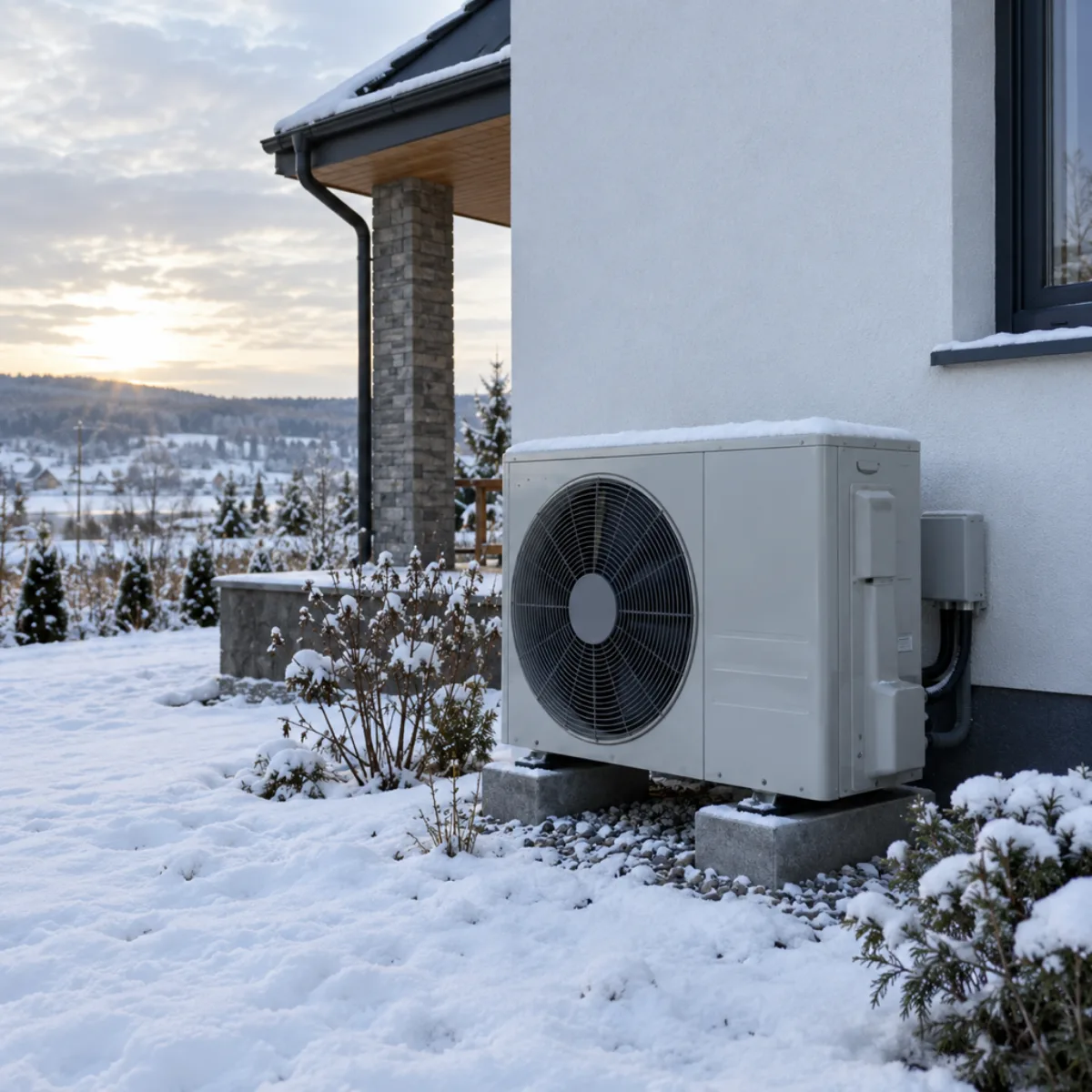
A heat pump must be evaluated for cooling and heating performance. The heating-dominated option in this worksheet raises the nominal cooling screen to 125% of the entered cooling load, but it does not calculate the winter balance point or select supplemental heat. A unit that passes this summer screen still needs its cold-weather capacity and electrical requirements checked against the heating design.
For a 20,000 Btu/h cooling load, a nominal 2-ton unit is 120% of the load. It fails the 115% cooling-only screen and passes the 125% heating-dominated screen. That distinction is arithmetic, not a claim that every heat pump may be oversized by the same percentage. Variable-capacity equipment and current selection procedures can have different requirements. Consult the applicable Manual S procedure and the manufacturer's expanded performance tables.
Keep the selected indoor coil, outdoor unit and airflow setting together as one rated combination. Changing one component can change sensible capacity or latent performance even if the nominal tonnage label stays the same. Document the chosen electrical circuits in the panel schedule template, including any supplemental heater. Then record the design temperatures and capacity table used so the reviewer can reproduce the selection rather than seeing only a rounded tonnage on the proposal.
Check the math
Worked example: 1.3288 load tons, 1.5 nominal tons
Enter 15,945.6 Btu/h and choose cooling-only equipment. The allowed screening interval includes 18,000 Btu/h. Final selection still requires the actual sensible and latent capacities at design conditions.
| Quantity | Equation | Value |
|---|---|---|
| Load tons | 15,945.6 / 12,000 | 1.3288 tons |
| Minimum capacity | 15,945.6 × 0.95 | 15,148.32 Btu/h |
| Maximum cooling screen | 15,945.6 × 1.15 | 18,337.44 Btu/h |
| Nominal candidate | 1.5 × 12,000 | 18,000 Btu/h |
| Candidate / load | 18,000 / 15,945.6 × 100 | 112.88% |
| 20,000 Btu/h heat-pump example | 24,000 / 20,000 | 120%; heating-dominated screen only |
AC Tonnage Calculator questions
How does the AC tonnage calculator work?
It divides total cooling load by 12,000 Btu/h per ton, then compares listed nominal sizes with the selected percentage band. It reports no match when no listed option fits. Final selection uses manufacturer performance data.
How many sq ft will 20,000 BTU cool?
A 20,000 Btu/h capacity cannot be assigned one reliable floor area. Insulation, windows, leakage, climate and humidity determine the load. Calculate those conditions first; 20,000 Btu/h is 1.6667 load tons.
Is 3 ton enough for a 2000 sq ft house?
Floor area alone cannot answer that. A nominal 3-ton unit represents 36,000 Btu/h, but delivered sensible and latent capacities must match the calculated load at the design conditions.
Is a 3 ton AC too big for 1500 square feet?
It may be, but the area does not prove it. Compare the calculated total, sensible and latent loads with actual equipment performance. Do not use the existing unit size as evidence that the same replacement size is correct.
Is it better to oversize or undersize an AC unit?
Neither is a sound default. Select equipment that meets the design loads within the applicable procedure. Oversizing can impair moisture control and cycling; undersizing can miss design-temperature requirements.
What should I do when no nominal tonnage fits the band?
Review other models and their expanded capacity tables, and verify the load inputs. Do not automatically move to the next larger nominal size. The listed nominal classes do not include every equipment option.
Sources
- ACCA Technical Manuals: Manual S: Equipment selection uses load, climate and manufacturer performance data.
- ACCA: Correctly Sizing Variable-Capacity Heat Pump Equipment: Illustrates why equipment type and Manual S edition matter; this page implements a simplified screening band, not all selection paths.
Link to this tool
Share the calculation method with your crew. This link opens the worksheet with its example inputs.
Next on the job
Keep your load assumptions with the project.
Start a project brief with the measurements and scope you have checked in this ac tonnage calculator.